

Bells Creek, Sunshine Coast
Exterior painting in Bells Creek, out on the acreage.
Farmland and acreage on the rural edge of the estate corridor. Bigger houses, longer driveways, and a shed that usually gets painted on the same trip.
- Since 1985
- /Family-run, locally owned
- /Fully insured
- /Dulux + Taubmans accredited
- /Lead & asbestos qualified
Local context
What this work looks like in Bells Creek.
Bells Creek is what's left of the farmland between Caloundra and the Glasshouse country. The 2021 Census counted 343 people across roughly eight square kilometres, most of it freehold farming about eight kilometres west of Caloundra. The locality gave up ground to the estates on 14 June 2019, when its boundary was redrawn to create Nirimba, and the Bells Creek arterial now runs straight through to Baringa. The houses out here are nothing like the ones at the end of that road. They're older, bigger, and a long way off the road, and painting the outside of one is mostly a job of access and logistics before it's a job of paint.
What we watch for
Conditions that change the job here.
Nothing is close by on an acreage block. There's no neighbour's tap to run a hose from and often no outdoor power where we need it, so we bring water and power for the job rather than assume it. Rural houses out here have wide eaves and high gables, which pushes the high work onto scaffold rather than ladders. The exposure is inland: Sunshine Coast Airport, the nearest station with long-term averages, records 1,492.6 mm a year with February wettest at 217.5 mm and 9am humidity above 70 percent from January to July, so the problems are shaded walls holding damp and dew on a half-dry coat, never salt. Paddock dust is the other one. A dirty surface is one of the main reasons paint lets go, so the wash that opens every job is doing more work here than it would in a suburb.
How it runs
What to expect.
A phone call first, because access decides the quote. We want to know the driveway, where the scaffold can stand, and what's planted against the walls. Then a site visit that walks the house and the outbuildings together. Sheds, studios and machinery sheds get quoted alongside the house because the trip out is the same either way, and doing them in one run saves a second mobilisation. Older houses out here get tested before anyone sands: the Queensland Government says a home built before 1970 has probably been painted with lead-based paint, and pre-1990 fibro eaves can carry asbestos. Then wash, scrape, sand, fill, seal and undercoat, with most full exteriors running five to ten working days depending on access. On acreage, access is the whole variable.
Usually included
- Scaffold for wide eaves and high gables on rural homes
- Water and power brought to site for the wash and the job
- Sheds, studios and outbuildings quoted on the same visit
- Lead and asbestos tests on older farmhouses before sanding
- Shaded walls treated for mould and given real drying time
Acreage at the end of the arterial
On a Bells Creek exterior, access is most of the quote.
Nothing is within hose reach
There is no neighbour’s tap and often no outdoor outlet where the work is. We arrive with water and power for the wash and the tools, and that is built into the price rather than discovered on the first morning.
Gables mean scaffold
Wide rural eaves and high gable ends put the top of the wall out of ladder reach. Scaffold goes in the quote as its own line, and where it can stand decides which elevation gets painted first.
One trip, three buildings
The house, the shed and the studio share the same mobilisation. Each is listed separately so you can drop one, but doing them in one run is cheaper than coming back a year later for the shed.
How a Bells Creek job runs
Phone, visit, set up once, then paint.
01
Phone before the photo.
Access decides an acreage quote, so we want the driveway, the ground around the house and the outbuildings described before we drive out. Then a site visit that walks the lot in one go.

02
Set the site up once.
Water, power and scaffold arrive together. Older houses get the lead and fibro tests before anyone sands, and the plan is agreed before the first wall is touched.
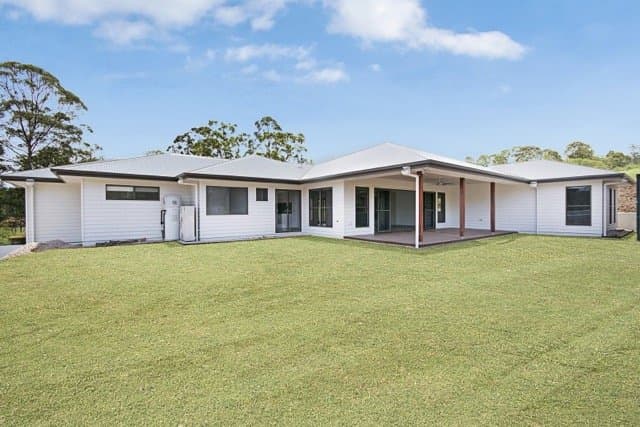
03
Treat the shaded side, then wait.
Mould and lichen come off the walls under the trees and the surface gets real drying time. Sunny elevations get painted while the shaded ones dry, so the days are not wasted.
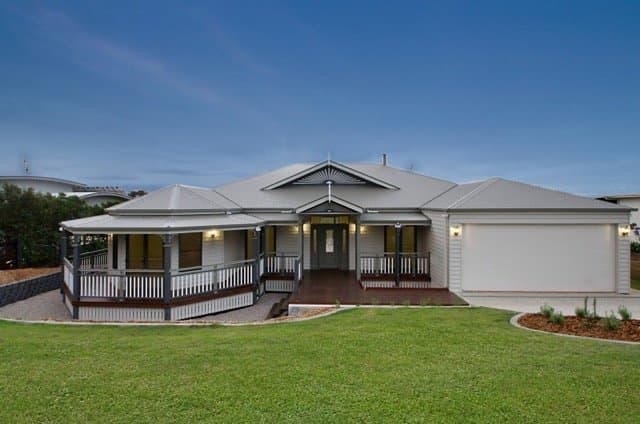
04
House, shed, walkthrough.
Two coats on each building in the dry window, fascias and gutters in the same run. We walk the lot with you in daylight at the end and touch up on the spot.

For agents and property managers
Rural rentals without the second trip.
An acreage rental is a long drive for a property manager. We meet the tenant on site, bring our own services, and send the before and after set the day we finish so the owner’s report does not need a second inspection.
Common questions
What people ask before booking.
Do you really need to see the place before quoting an acreage exterior?
Yes, and more than for a suburban house. A photo tells us the cladding and the colour. It doesn’t tell us whether the scaffold can stand on the uphill side, whether there is a tap within hose reach, or how the gear gets to a gable that sits behind a hedge. On acreage those three things set the price more than the paint does. The visit takes an hour, it’s free, and it means the quote you get is the quote you pay.
Should the shed go in the same quote as the house?
Usually, yes. The trip to Bells Creek is the same whether we paint one building or three, and setting up water, power and scaffold once is cheaper than doing it twice a year apart. Sheds and studios get listed as their own lines, so you can see the cost and drop one if the budget says so. Colorbond sheds generally don’t need paint. Painted timber or fibro ones do, and fibro from before 1990 gets tested first.
We're on tank water. Does that change the wash?
It changes where the water comes from, not whether the wash happens. We won’t drain your tank to clean a house, so we bring water for the wash and power for the tools rather than assume either is on tap. The wash itself still comes first. Paddock dust and shade-side mould are two of the main reasons paint loses its grip, and sealing over a dirty wall just holds the problem under a new coat.
The house is an old farmhouse. What gets tested?
Two things, if the age warrants it. The Queensland Government says a home built before 1970 has probably been painted with lead-based paint, and sanding or grinding is what makes it dangerous, so old layers get a lead test before a sander comes out. Fibro eaves, soffits or sheds from before 1990 can contain asbestos, and Queensland’s guidance says sound sheeting can be painted but never power-sanded or pressure-blasted. If either turns up you get the plan and the paperwork first, and the preparation is done by hand.
Why does the shaded side of a rural house need more time?
Because it never properly dries on its own. A wall under mature trees holds moisture long after the sunny side has dried, and that is where mould and lichen come back first through a coat that went on too early. We treat that growth, wash it off and then wait. Dulux’s data sheet says overnight dew on a drying coat can damage or remove it, so the start on that elevation waits for the wall rather than the clock. Building that wait into the schedule is most of what makes a hinterland job go smoothly.
When's the best time of year to paint out here?
Late winter into spring. At the airport station, September is the driest month at 51.1 mm, with July and August close behind, and 9am humidity drops to the mid-sixties by spring. February and March are the wettest, with 11.7 and 12.5 rain days. Dulux sets a 5 degree floor for air and surface and Taubmans works from 10, so a cold winter morning waits for the wall to warm. Any month can work if the day and the wall are dry, but the dry window gets booked first, so ask early.