
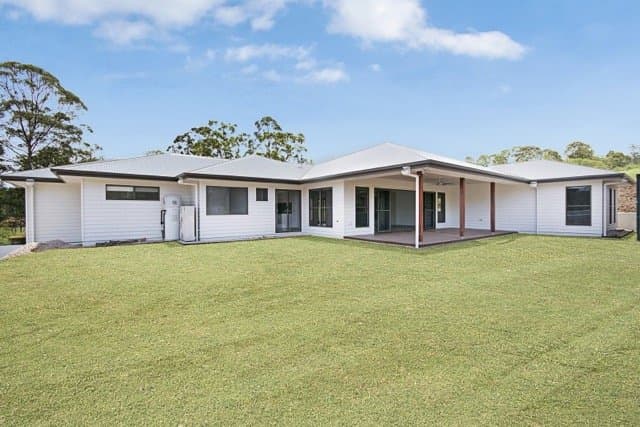
Glasshouse Mountains, Sunshine Coast
Exterior painting for Glasshouse Mountains timber and tin.
Large owner-occupied houses among pine plantations and paddocks. Old coatings tested before a sander comes out, shade-side walls washed back properly, and dates set around the wet summer.
- Since 1985
- /Family-run, locally owned
- /Fully insured
- /Dulux + Taubmans accredited
- /Lead & asbestos qualified
Local context
What this work looks like in Glasshouse Mountains.
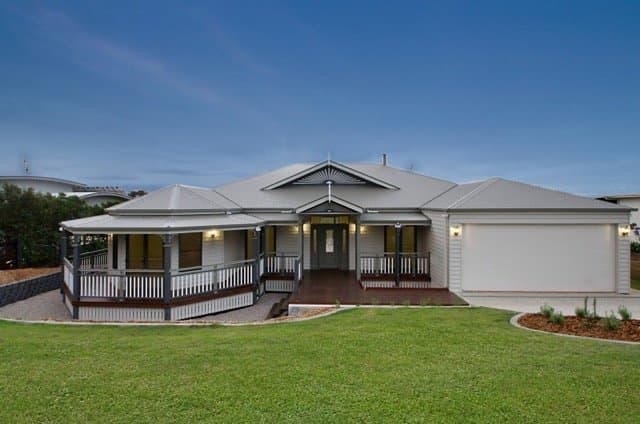
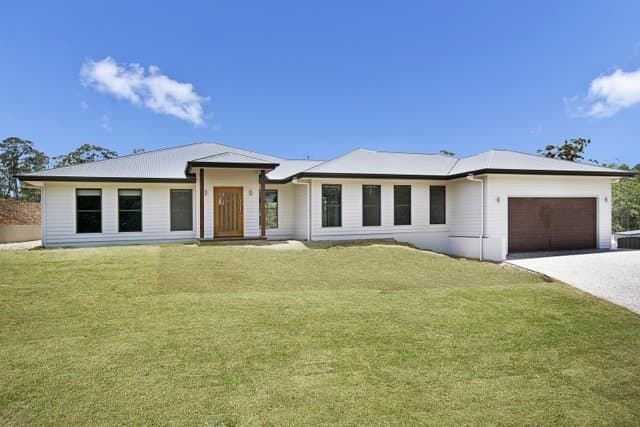
Glasshouse Mountains is a railway town, and that shows in the houses. The station opened soon after the North Coast line reached Mellum Creek in 1890, so there's cladding here from every decade since, and you can't read a house's age from the street. Most of it is big and owner-occupied. At the 2021 Census, 98.1 percent of occupied dwellings were separate houses and 54.8 percent had four or more bedrooms. So an exterior repaint out here is long wall runs, high gables and a lot of eave line, on a house whose paint history is a question until we've tested it.
What we watch for
Conditions that change the job here.
Exposure out here is shade and water rather than salt. The peaks sit over pine plantations, bushland and farmland, which means needles and pollen in the gutters, dust off the paddocks and the haulage routes, and trapped moisture on the south and east walls under canopy. That's where mould and lichen settle on cladding and fascias. The Bureau's Beerburrum Forest Station, the nearest with published statistics, averages 160 mm or more each month from December to March, while August and September come in under 46 mm. Council's local plan code describes the town's traditional materials as timber cladding and corrugated iron with understated colour schemes. That's a benchmark for new buildings rather than a rule for repainting, but it's a fair description of what sits right against paddocks and peaks.
How it runs
What to expect.
Testing comes before anything else on an older house. The Queensland Government says a home built before 1970 has probably been painted with lead-based paint, and sanding is what makes it dangerous, so pre-1970 layers get tested before a sander is unpacked. Fibro eaves and soffits from before 1990 get checked for asbestos the same way. Sound sheeting is prepped by hand, never power-sanded or pressure-blasted. Then the wash, which carries more of the job here than it does on the coast because of the shade-side growth. The quote visit also sorts the shed, the fence and where the vehicles go. At the 2021 Census, 31.1 percent of dwellings here had three or more registered vehicles, and the driveway is where the gear ends up.
Usually included
- Lead test on pre-1970 paint layers before any sanding starts
- Fibro eaves and soffits from before 1990 checked, then hand-prepped
- Mould and lichen treated on the shaded walls under canopy
- Long eave lines, fascias and gutters on large free-standing homes
- Sheds and fences quoted as their own lines on the same visit
A railway town's housing
Every decade of cladding, and you can't tell which from the street.
Age is a test, not a guess
The station opened after the line reached Mellum Creek in 1890, so the town has been building ever since. Pre-1970 paint layers and pre-1990 fibro both get tested before a sander comes out, whatever the house looks like.
Shade does the damage here
Pine plantations, bushland and paddocks mean south and east walls stay damp under canopy, and mould and lichen settle on the cladding. The wash is the first step and it carries more of the job than it does on the coast.
Big houses, long runs
At the 2021 Census, 98.1 percent of occupied dwellings were separate houses and more than half had four or more bedrooms. Long eave lines and high gables mean the quote prices each elevation on what it needs.
How a Glasshouse Mountains job runs
Test it, wash it, then book the dry window.
01
Walk the block first.
Access, outbuildings and where the vehicles go get settled on the quote visit. We list the shed and fence as their own lines and tell you which walls can wait a season.
02
Test the old layers.
Pre-1970 paint gets a lead test and pre-1990 fibro eaves get checked for asbestos before anyone sands. A positive result means a plan and paperwork first, hand preparation second.

03
Wash the shade side back.
Mould and lichen come off the south and east walls, then the walls get real drying time. Dew on a half-dry coat can lift it, so the morning start waits for the wall rather than the clock.
04
Coat it in the dry months.
August and September are the driest months at the Beerburrum station, so that is when a hinterland exterior runs best. Two coats, fascias and gutters in the same run, then a daylight walkthrough with you.

For agents and property managers
Acreage rentals, reported properly.
Hinterland rentals sit a long way from the office, so we send the before and after set the day we finish and deal with the tenant direct on access. Where a house tests positive for lead or asbestos, the paperwork goes in the owner’s file with the photos.
Common questions
What people ask before booking.
Why do you test the old paint before sanding a Glasshouse Mountains house?
Because the Queensland Government says a home built before 1970 has probably got lead-based paint on it somewhere, and sanding or grinding is what turns it into dust you can breathe. Lead paint in good condition, or sitting under a sound new coat, isn’t a health risk. Dust is. A town that has been building since its 1890 railway station has houses of every age, so we test the house in front of us rather than guess from the street. If it comes back positive you get the plan and the paperwork before anything is disturbed.
Does the council's timber and tin character code limit my colour choice?
Not for a repaint. The local plan code names timber cladding, corrugated iron and understated, low-reflective colours as the town’s traditional look, but it’s an assessment benchmark for new development and says nothing about repainting an existing house. If your place is a listed heritage place or sits inside a mapped character area, check the heritage and character areas overlay before you change the outside. Otherwise treat it as good advice. Dulux rates Natural White at a solar absorptance of 0.204 and Black at 0.957, so a dark wall in full sun runs hot, chalks sooner and usually needs extra coats.
The south side is under trees and never dries. Can you paint straight over it?
Not without a proper wash first. Under canopy the shaded walls hold moisture and grow mould and lichen on the cladding and fascias, and paint applied over that lets go early. The wash is the first step on every job, and here it does more work than usual. Dulux’s data sheet also says not to paint on humid days and warns that overnight dew on a drying coat can damage it, so a damp wall gets drying time before a coat goes on. Washing that side once a year afterwards is cheap insurance.
What happens if the job runs into the wet season?
It stretches rather than fails. At the Bureau’s Beerburrum Forest Station, December to March each average 160 mm or more, with up to 7.6 rain days a month against 2.8 in August. Dulux’s two-hour recoat is measured at 25 degrees and 50 percent humidity, so a humid week slows every coat. Most full exteriors run five to ten working days depending on access, and we’d rather add days than paint onto a wet wall. July to October is the easiest window on the Coast, so ask early if you want it.
Our eaves are old fibro. Will you sand them?
Not with power tools, ever. Queensland’s asbestos guidance says sound asbestos cement can be painted with normal precautions, but power sanders, grinders and pressure blasters must never touch it. Pre-1990 fibro eaves and soffits can contain asbestos, so we test them before anyone starts and prep sound sheets by hand. Eaves also peel more than walls because rain never rinses them, so they get careful attention rather than a quick overcoat. Removing more than 10 square metres of bonded sheeting is licensed work, and that’s a separate scope with its own paperwork.
We've got three vehicles, a shed and a long fence. How does that change the quote?
It changes the scope, and we’d rather settle it on the quote visit than on day one. Large lots are the norm here, and at the 2021 Census 31.1 percent of dwellings had three or more registered vehicles. We walk the house, say which walls are worth doing now and which can wait, and list the shed and fence as their own lines so you can add or drop them. Where the cars sit while walls are being coated is worth agreeing before the start date too.